
A note on the publication of Enterprise Readiness Level
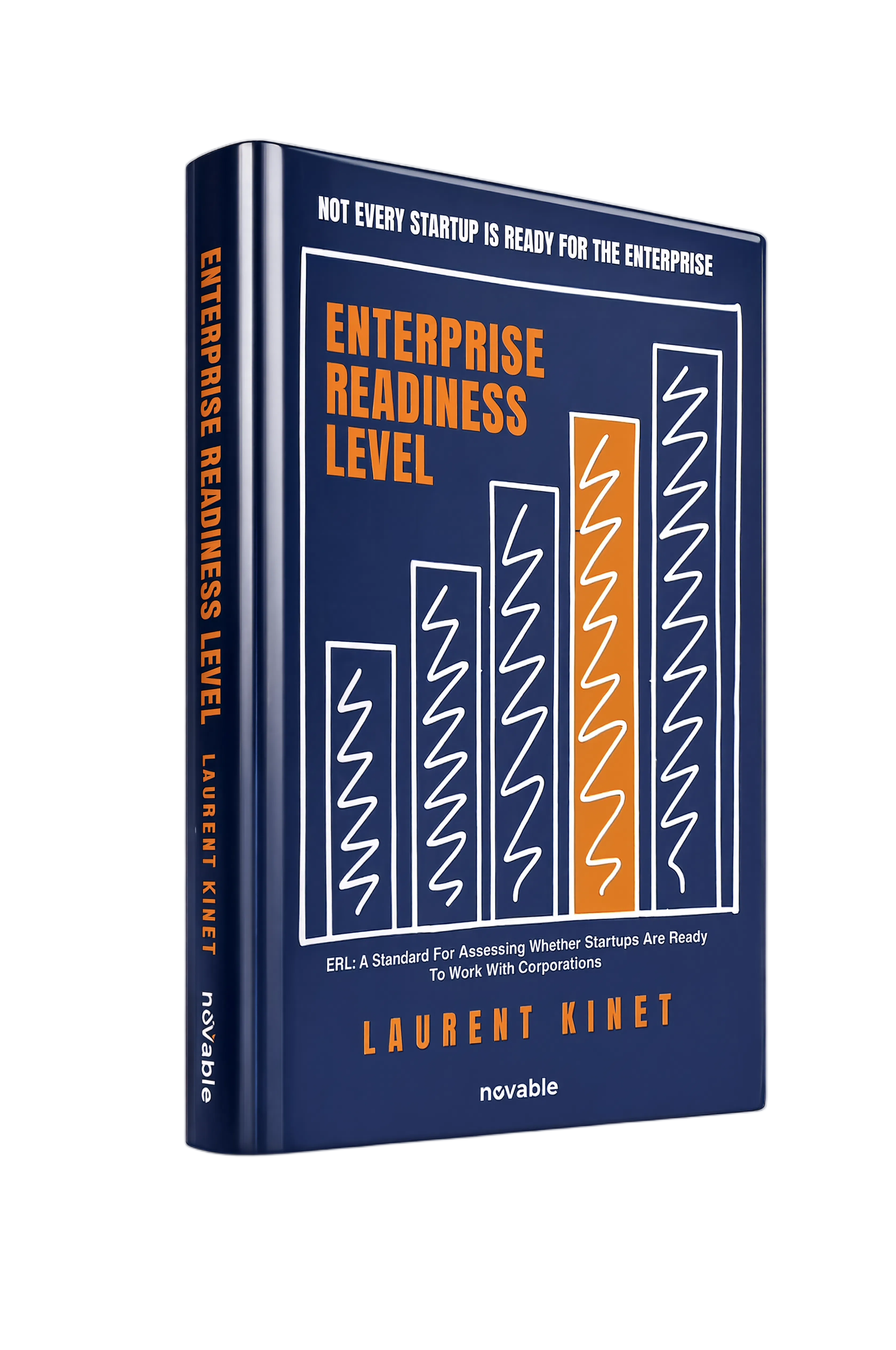
This is my third book, and it's the one I've thought about writing for longer than the other two combined.
Corporate Venturing: A Framework came out in 2024, mapping fifty models of how startups and corporations actually collaborate, drawn from twenty years of sitting on both sides of that table. Révolutions silencieuses followed in 2026, a step outside business writing entirely, ten essays on quieter transformations reshaping the systems we live inside. And now Enterprise Readiness Level, which brings me back to business specifically, and back to the question I've spent the last seven years, since founding Novable in 2019, actually specialising in rather than merely practising.
I want to write about that shift here rather than about the book's content. What interests me more, on the day this thing finally exists as an object someone can buy, is what it actually means to write something down after twenty years of doing it instead.
The difference between knowing and articulating
There is a particular kind of arrogance in assuming that because you can do something well, you understand it well enough to hand it to a stranger. I spent most of my career discovering how false that assumption is. Running K Company, building Swan Insights, advising founders through Sinople, none of it required me to explain, in writing, precisely why one judgement call was right and another was wrong. It required me to make the call, live with the consequences, and get slightly better at making it next time. That is craft. It is not, on its own, a framework.
Writing Corporate Venturing: A Framework in 2024 was the first time I had to close that gap, and it was considerably harder than I expected it to be. Fifty collaboration models sounds, from the outside, like a taxonomy exercise. From the inside, it was an uncomfortable audit of how much of what I did by instinct actually had a describable structure underneath it, and how much was just accumulated pattern-matching I'd never been forced to justify to anyone. Some of it survived the audit. A fair amount didn't, or didn't survive intact, and had to be rebuilt into something that would still be true on a Tuesday when I wasn't in the room to explain it.
Enterprise Readiness Level asked the same question again, more narrowly and, I think, more rigorously. A framework mapping how collaboration can work is one kind of claim. A framework claiming to measure, defensibly and repeatably, whether a specific company is ready for a specific kind of collaboration is a considerably riskier one, because it invites exactly the kind of scrutiny a looser framework can quietly avoid. Someone can disagree with a taxonomy and just use a different one. Someone can test a scoring instrument against an outcome and find out, plainly, whether it was right. Writing this book meant accepting that kind of exposure deliberately, including a chapter near the end that states outright what the framework still can't prove, rather than tucking that admission into a footnote nobody would read.
What narrowing actually buys you
For most of my career before Novable, my work was, by design, broad. Sinople's original service portfolio, going back to 2003, spanned venture design, venture building, coaching, market research, portfolio strategy, whatever a given client's actual problem turned out to be. That breadth was valuable. It also meant I never stayed with any single question long enough to write a serious book about it, because I was always three questions further along by the time any one of them had matured into something worth formalising.
Founding Novable in 2019 changed that, not because the underlying expertise changed, but because the focus did. Once the daily work became specifically about whether startups are ready to work with large organisations, at scale, across thousands of engagements rather than a handful, the same twenty years of experience started accumulating differently. Breadth generates anecdotes. Narrowness, sustained long enough, generates a dataset, and eventually generates a book, because you finally have enough repetition of the same underlying question to notice the pattern underneath your own intuition rather than just trusting the intuition itself.
Seven years of that narrowing is what actually sits behind this book, not the seven months I spent writing it. Two hundred practitioner interviews by our team. Thousands of scouting campaigns. A hundred thousand companies assessed. None of that would exist if I had stayed generalist. The book is what specialisation looks like once it has had enough time to compound.
Where this sits next to the other two
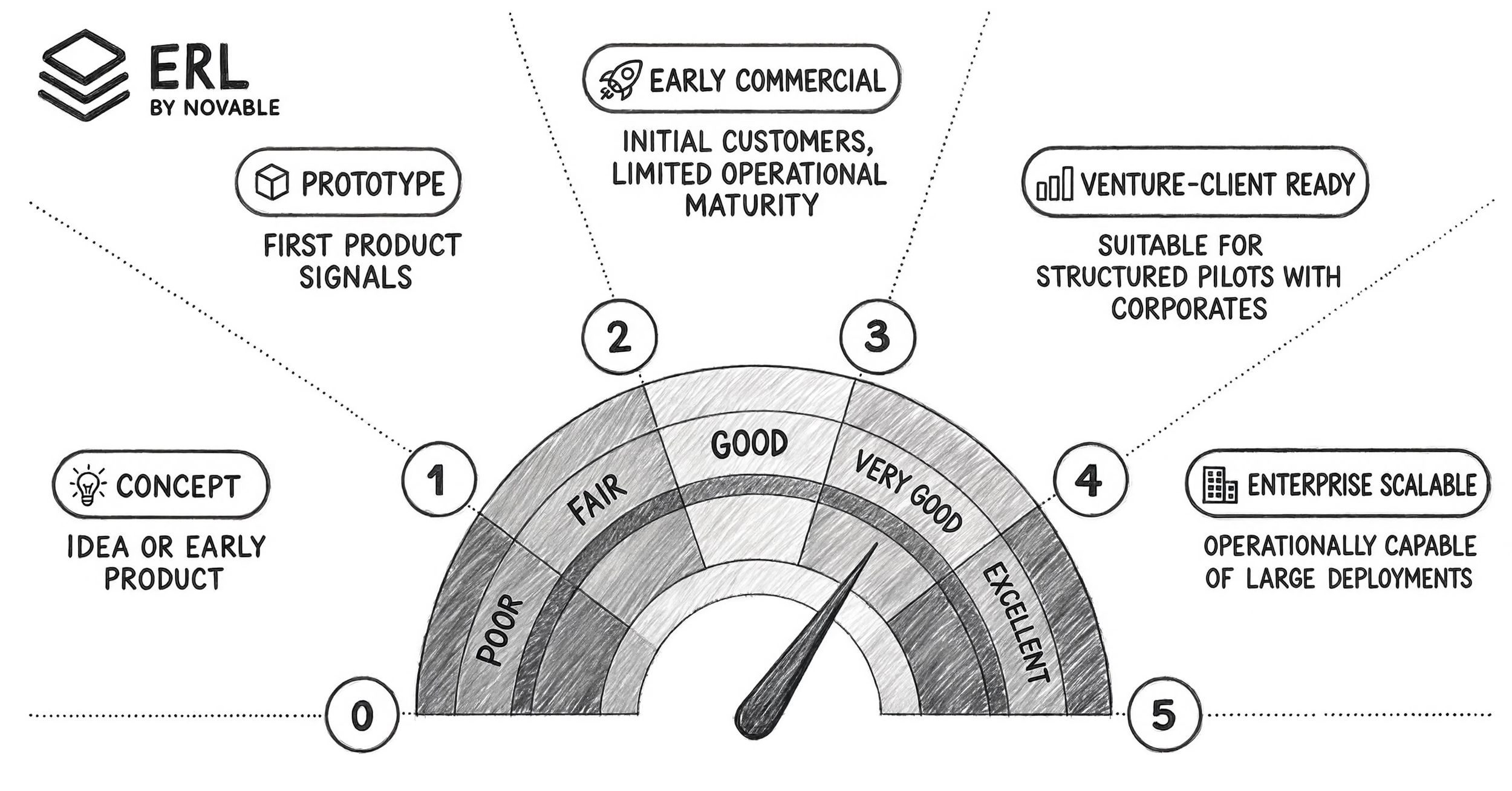
If Corporate Venturing: A Framework is the map, the fifty ways a startup and a corporation can actually work together, Enterprise Readiness Level is the instrument you need before you can responsibly choose a route on that map at all. The framework tells you what collaboration could look like. ERL tells you whether the company standing in front of you is currently capable of surviving the version you're considering. I didn't plan the two books as a pair when I wrote the first one, but reading them now, together, they clearly are one: a route map, and a readiness check for whoever is about to travel it.
The discomfort that publishing forces on you
There's a specific discomfort in this particular launch that neither of the previous two books gave me quite as sharply. Révolutions silencieuses was reflective by design, an essay collection is allowed to sit with uncertainty as its natural mode. Corporate Venturing was descriptive, mapping what exists rather than claiming to measure it. Enterprise Readiness Level makes an actual predictive claim: that a level computed early in an engagement says something real about whether it will still be standing eighteen months later. That is a claim the world can eventually check against me, in a way the other two books were never quite exposed to in the same direct sense.
I decided, over the course of writing it, that this exposure was the right trade rather than a risk to be managed away. A framework confident enough to be wrong in public is more trustworthy than one hedged into meaninglessness, and I would rather publish something that can be tested and eventually corrected than something vague enough to survive forever by never actually claiming anything. The book says as much about itself, in its own words, better than I can say it about the book here.
What publishing actually does
I don't think this book ends anything. The academic work with UCLouvain continues regardless of what's now printed and bound. The framework will keep being recalibrated against outcomes that haven't happened yet. What publishing does, I've come to think, is not conclude a piece of work. It's closing a specific chapter of doing that work privately, inside client engagements and internal documents nobody outside Novable ever saw, and opening a different chapter where the thinking has to survive contact with readers who owe me nothing and can simply put the book down if it doesn't hold up.
That's a good discipline to submit to periodically, once every couple of years, on whatever the current centre of gravity of my own work happens to be. It was true of corporate venturing broadly in 2024. It's true of enterprise readiness specifically now. I suspect, in another two or three years, there will be a fourth book, on whatever the next question turns out to be that I've spent that time unable to stop thinking about.
Enterprise Readiness Level is available now. If you want to see where it actually came from rather than take my word for the last seven years, the book is the longer version of everything above, told properly, with the evidence rather than the reflection.