
[WORKSHOP] Corporate Venturing in action @ VINCI Omexom
On May 12th 2026, I had the privilege of running a full-day Corporate Venturing workshop with the Omexom innovation network at VINCI Leonard in Paris, alongside my colleague Yves Colinet. Twenty-three innovation leaders, technical directors, engineering managers, sustainability relays and country-level business sponsors gathered from nine countries (Spain, France, Germany, the Netherlands, Norway, the UK, Italy, Sweden and Belgium) for a day designed not to inspire but to equip. Omexom, VINCI Energies' brand for the energy transition, faces the same paradox most large industrial groups face today: an extraordinarily decentralised network (close to 600 business units) confronted by accelerating shifts in electrification, grid pressure, decarbonisation, AI-native operations and customer expectations, with a small central innovation team trying to make sense of it all. Their question to us was simple and operational: how do we move from scattered, opportunistic startup interactions to a structured system that actually scales across the network? The Corporate Venturing Framework (CVF) was built for exactly this kind of question, and the day's work confirmed that the framework holds when you put it under operational pressure, which is the only test that matters.
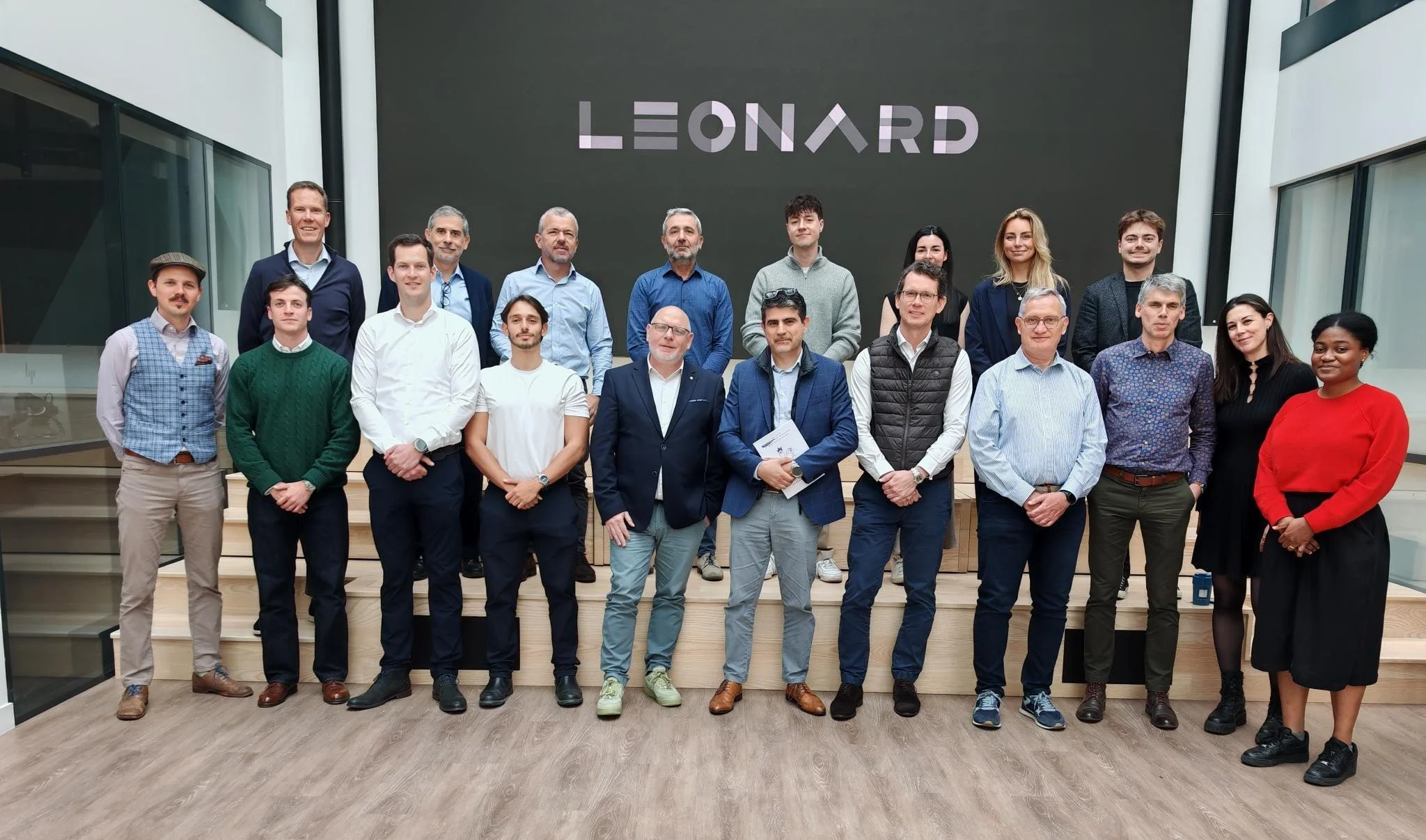
What struck me most about the room was its honesty. There was no pretence that everyone arrived already convinced; Omexom's leadership had deliberately invited a mix of believers, sceptics and undecided technical leaders, and the conversation that emerged was the better for it. We spent the morning dismantling the most common misconception in any room of this kind — that corporate venturing means putting money into startups — and rebuilding it as a spectrum of fifty engagement models, with venture clienting positioned as the most accessible entry point for operationally-driven organisations. We mapped Novable's six strategic frontlines for Energy & Utilities (the new energy trilemma, electrification, grid bottlenecks, nuclear renaissance, molecules in transition, AI-native operations) against Omexom's own megatrends, and walked through twelve real corporate-startup collaboration cases drawn from the public record: National Grid with sees.ai and LineVision, ENGIE with AMS, PG&E with Atomic Canyon, Snam with ITM Power, EDF with Nuvve, Tokyo Gas with Teralta, and others. The afternoon was where the work got serious. Four mixed groups applied the CVF to a single strategic vertical — AI-Native Operations — and produced concrete venturing opportunities with engagement models, success criteria and adoption pathways, all anchored in field reality rather than in slideware. By the end of the day, the room had a vocabulary, a method, a draft of an Open Innovation OS for Omexom, and twenty-three certified CVF practitioners ready to take the conversation back into their respective business units. My deeper conviction, leaving the room, is that Omexom has the right ingredients to make this work — operational pragmatism, network reach, and a leadership willing to challenge its own museum tendencies — but that the next twelve months will decide whether this day becomes a turning point or just another well-attended event. The continuation work has already started.