[KEYNOTE] Real corporate-startup collaboration @ BIR&D
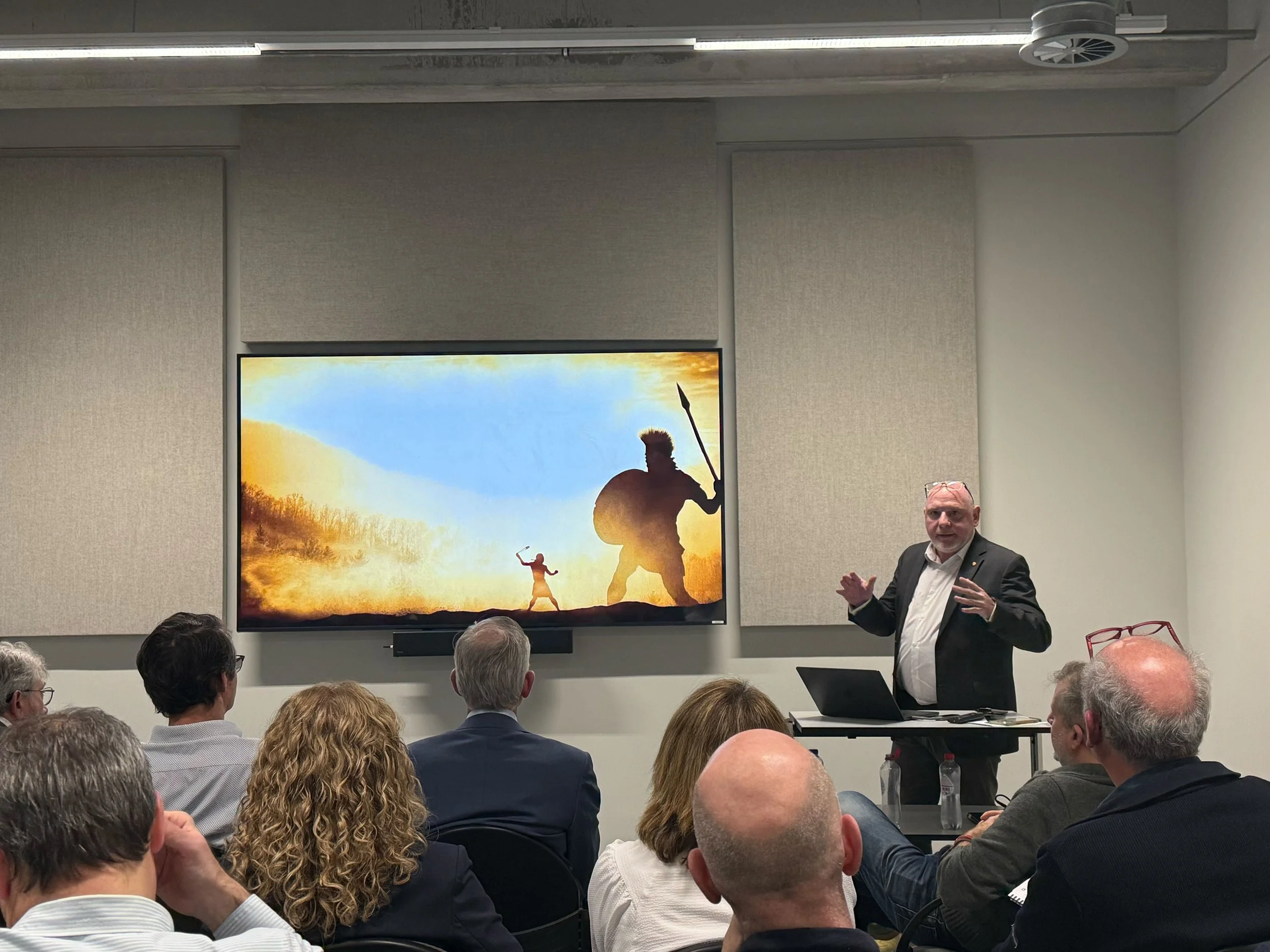
Laurent gave a keynote at the BiRD event in Genk on January 14th 2026.
The BiRD keynote explored how large industrial companies in Belgium can move beyond innovation theater and build startup collaborations that actually deliver impact. Speaking to a room of R&D and innovation leaders, the talk started from a simple observation: while there have never been so many tools, programs and buzzwords around open innovation, too many initiatives are still designed around corporate comfort instead of startup reality. The keynote unpacked the full spectrum of corporate–startup engagement, from accelerators and hackathons to venture clienting, venture capital and acquisitions, and showed how each can serve precise strategic objectives when used intentionally rather than cosmetically. It also highlighted why the tables have turned: startups now have more choice, more information and less patience, and are increasingly able to detect when a corporate is simply collecting pitch decks rather than committing to real business.
From there, the keynote introduced a double requirement: corporates must become venture-ready, and startups must become enterprise-ready, if collaboration is to move from one-off pilots to structural value creation. On the corporate side, this means rethinking internal governance, shortening procurement cycles, aligning innovation programs with real buying power, and cultivating “porosity” between business units and external ecosystems, in line with BiR&D’s mission to connect industrial R&D leaders across Belgium. On the startup side, it means developing commercial readiness, operational excellence, organisational maturity and robust technology so they can withstand corporate scale and expectations. The keynote closed with three pragmatic recommendations for corporates: be faster (replace nine‑month cycles with small, quick pilots), be transparent (do not run challenges if there is no intention to buy), and be attractive (remember that startups compare you with other potential partners). In a context where both sides need each other to survive and grow, the future of corporate venturing is not about corporates helping startups or startups disrupting corporates, but about building mutual readiness so that creativity and industrial power can combine to change the world.